
At Ikigai, we’ve talked a lot about the benefits of Hyperbaric Oxygen Therapy (HBOT), a regenerative therapy that uses concentrated oxygen to boost your body’s natural healing capabilities. Regenerative therapies are attracting the medical world’s attention, including new studies on the synergistic effects of combining HBOT with Platelet Rich Plasma (PRP) injection. PRP is becoming a common treatment for joint pain and soft tissue injuries. However, it doesn’t work the same on everyone- the way PRP is administered and what you do outside of treatments can mean the difference between lasting results and major setbacks.
So, what can you do after a PRP injection for better results?
How does a Platelet Rich Plasma Injection (PRP) Relieve Pain?
PRP uses your body’s own healing abilities to stimulate growth and regeneration at the cellular level. It starts with a blood draw, which is processed in a centrifuge to separate platelets from the rest of the blood components. The concentrated platelets are reinjected into a targeted area of the body where healing is needed, such as a hip, knee, or tendon. These platelets are chock full of growth factors that help the body induce collagen production, stimulate cell growth, reduce inflammation, and support tissue repair. PRP is most commonly used for musculoskeletal issues such as joint pain and osteoarthritis, or to speed healing after surgery. Because it uses your body’s own material, it is considered a natural and generally safe procedure, although it can trigger the body’s inflammatory response as part of the healing process.
To be considered platelet-rich, the concentration of a PRP injection should be 3-4 times higher than the baseline levels found in your blood (about 10 billion platelets per injection). Getting the correct dose is vital to your outcomes. Many providers use less expensive equipment to cut costs, but cheaper machines don’t distill enough blood to achieve an effective platelet count.
If you’re considering PRP injections for joint pain or osteoarthritis, be sure to ask your provider what the platelet count in your injection will be. They should be able to give you at least a ballpark figure. The injection should be guided into the targeted tissue by ultrasound. Injections without imaging are not as accurate.
The effectiveness of PRP also depends on what you do outside of treatments, such as maintaining an appropriate balance of rest and exercise, and whether or not you take anti-inflammatory medications that could hinder your body’s natural healing. Including other regenerative modalities like HBOT can also help support recovery and speed up healing.
Adding platelets to damaged tissue can have healing effects on its own, but if the environment isn’t conducive to receiving and using those platelets, some of the platelets may end up getting destroyed, meaning you won’t get the full benefit of the treatment.
This is where HBOT comes in.
Hyperbaric Oxygen Therapy for Joint Pain
Hyperbaric Oxygen Therapy, or HBOT, is known for supporting treatment for a wide variety of conditions, including IBD, mold toxicity, traumatic brain injuries (TBIs), Parkinson’s Disease, wounds, infection, and even fertility. It works holistically by delivering oxygen to cells and boosting your body’s own healing capabilities.
In an HBOT treatment, you breathe pressurized oxygen through a mask. Your body delivers the excess oxygen to cells that are weak or have become hypoxic. This process supports the immune system, reduces inflammation, and allows nutrients to enter the cells, promoting growth and regeneration.
How PRP Injection and HBOT Work Together
Both Hyperbaric Oxygen Therapy and Platelet Rich Plasma injections offer significant healing effects on their own. When combined as part of a treatment plan, these two modalities have synergistic qualities that amplify each other’s effectiveness for pain relief and healing.
Here are some ways they work together:
- Increased oxygen flow supports PRP’s healing pathways. By sending oxygen to damaged cells, HBOT helps boost the processes stimulated by PRP that are oxygen-dependent, like collagen and stem cell activation.
- Reduced inflammation. Both HBOT and PRP have anti-inflammatory effects on the system.
- Improved circulation. HBOT improved circulation, allowing the platelets from PRP injections to get to damaged tissue faster and more effectively.
To get the most out of combining HBOT with PRP, an optimal protocol is 3-5 HBOT session before getting a PRP injection to reduce inflammation, which will allow the platelets to travel more easily. After the PRP, 5-7 HBOT session are recommended to help reduce swelling, increase circulation, and remove toxins.
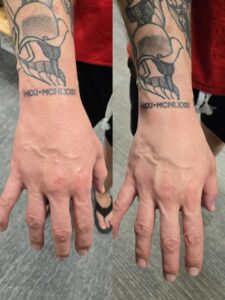
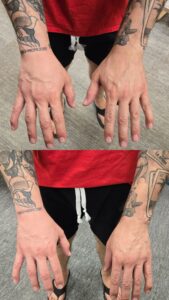
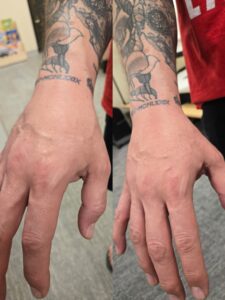
One of our patients here at Ikigai came in for a few HBOT sessions before getting a PRP injection, and then came back for HBOT 24 hours after the procedure. He combined these two modalities as part of his recovery after a major motor vehicle accident and the results have been significant!
PRP often results in significant swelling to the area. These photos were taken before and after the first HBOT session after the procedure – you can see how much the swelling has reduced in just one session: :
Both PRP and HBOT can treat several conditions and illnesses; the combination is most often used with:
- Chronic inflammation after an injury (like our patient at Ikigai!)
- Muscle tears
- Sprains
- Ligament strains
- Stress fractures
- Osteoarthritis
. . . just to name a few. Patients who receive both HBOT and PRP report feeling less stiff, moving more easily, and experiencing less pain.
Can HBOT Support Your Healing After PRP?
If you’re considering PRP injections, or currently getting PRP treatment, HBOT might help speed up your healing and give longer-lasting results. To schedule a consult for HBOT here at Ikigai, go here!