
For couples longing to conceive a child of their own, infertility can feel like a devastating blow. While it can be a sensitive subject that many couples keep private, infertility (the inability to conceive after one full year of trying) affects 15-17% of couples in the United States, sometimes struggling for years before conceiving. Hyperbaric Oxygen Therapy offers hope for those couples by boosting reproductive health and increasing the chances of success of other infertility treatments. In previous blogs, we’ve talked about the wide variety of benefits of HBOT, such as reducing inflammation, encouraging blood flow, supporting the immune system, and repairing tissue- all of which support healing for conditions like IBS, Traumatic Brain Injuries, Lyme Disease, Parkinson’s, and mold toxicity, among many others. But can HBOT help you get pregnant?
Before we get into how HBOT can help, here are some of the most common treatments for infertility:
- Oral or injectible medication that help stimulate the ovaries, support egg growth, or affect hormones.
- Artificial insemination, or Intrauterine insemination (IUI), a procedure that prepares the sperm and places it in the uterus. IUI can be done in conjunction with other treatments, like medication.
- Invitro fertilization (IVF) joins the egg and sperm together outside the body, then plants it in the uterus.
- Egg and sperm donation is one option for people who cannot produce healthy egg or sperm.
No matter which route a couple decides is right for them, it is a very personal and often emotional decision. Anyone going through infertility treatment knows how difficult it can be and wants to give their family the best chance possible to conceive a healthy baby.
Research in HBOT as a supplemental treatment for infertility is still in its infancy, but clients see results and there is evidence that it can speed up the effects of other treatments by supporting the health of reproductive organs in both men and women.
Causes of Infertility
There isn’t just one cause of infertility. Some of the more common and obvious causes in women are PCOS (Polycystic Ovary Syndrome), endometriosis, or poor egg quality. Men can be affected by low sperm count or motility issues. In both men and women, inflammation, oxidative stress, and poor circulation to reproductive organs can also play a role.
The health of mitochondria in the cells is an essential component to consider. You might have heard of “mighty mitochondria,” because these organelles are the energy source for most cells. Reproductive cells have about ten times the number of mitochondria as other cells because of the amount of work it takes to do their job. When energy is low, such as when they aren’t getting enough oxygen, cells don’t have the resources needed for conception.
How Hyperbaric Oxygen Therapy Supports Fertility
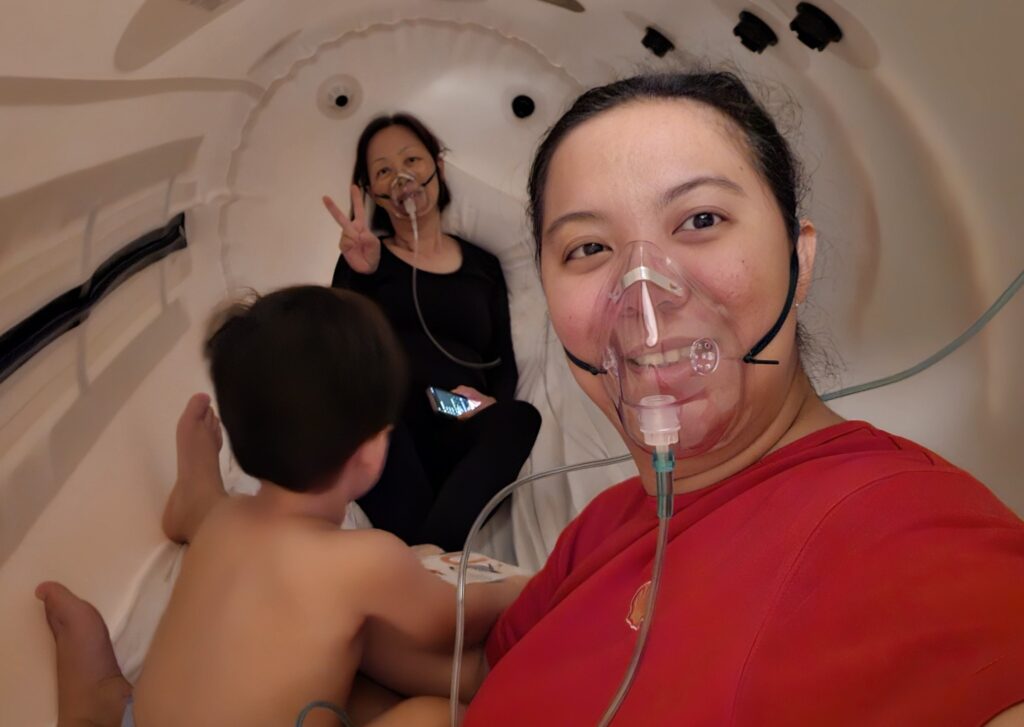
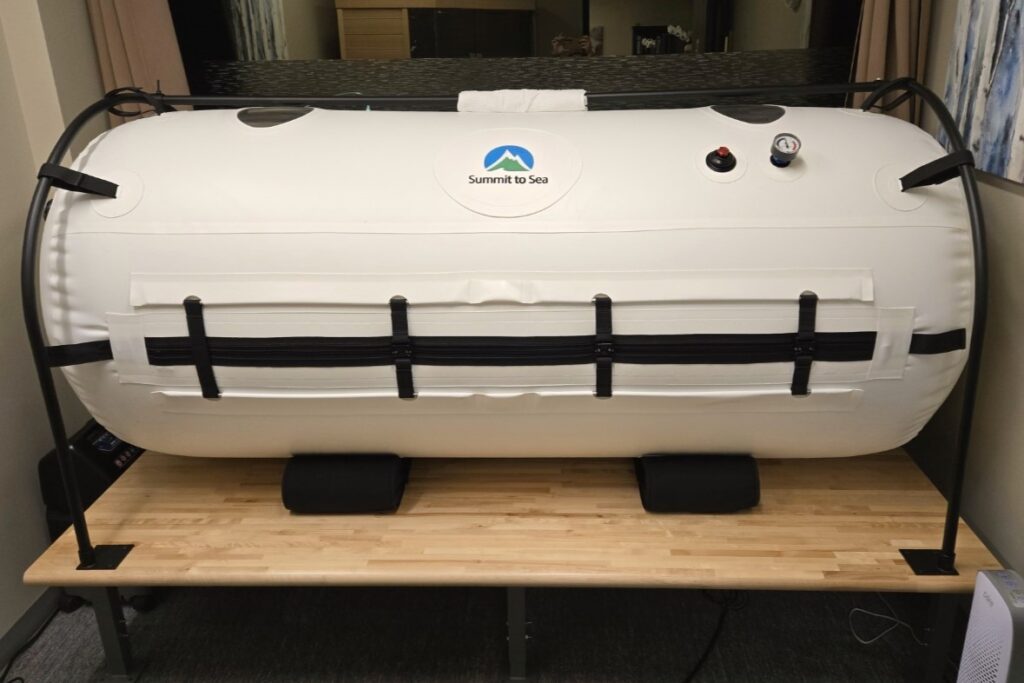
Hyperbaric Oxygen Therapy involves breathing pressurized oxygen equivalent to about 10 feet below sea level, usually through a mask. The patient relaxes in a chamber while the oxygen permeates cells in the body, giving them a boost of energy and allowing nutrients into the cell.
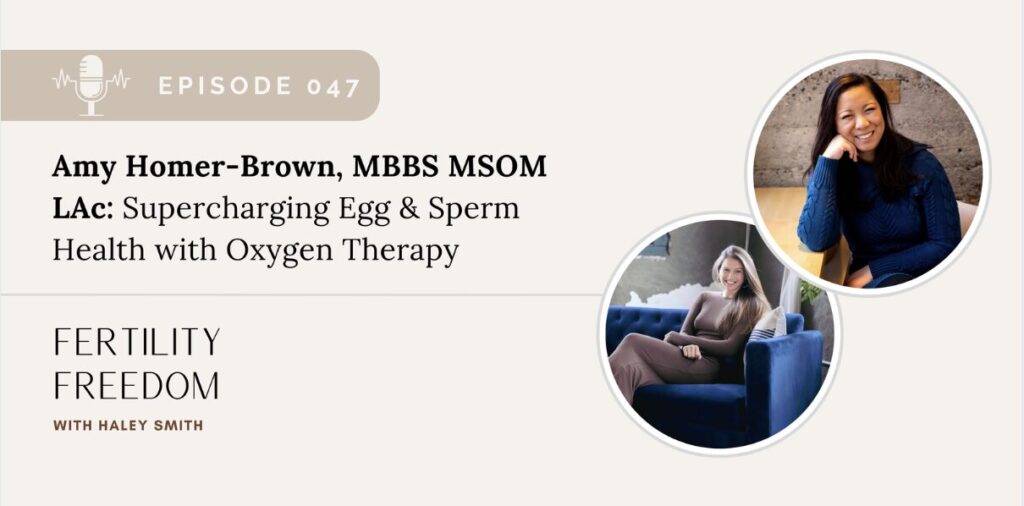
Healthier cells means greater chance of fertility. The oxygen boost provided by HBOT improves egg and sperm health by giving the mitochondria more energy to put toward reproduction. Haley Smith, Nutritionist, Fertility Awareness Practitioner, and the host of Fertility Freedom Podcast, calls it “recharging the batteries” of mitochondria. You can hear more in a recent interview with Amy Homer-Brown on Spotify or Apple Podcast!
When the extra oxygen is carried into the body, the molecules free float and go where they are needed, such as places where circulation is compromised. In the reproductive system, this can show up as erectile dysfunction in men or inflammatory conditions like endometriosis for women. Delivering the extra oxygen and reducing inflammation helps create space for the circulation to flow more easily and supports an ideal environment for an embryo to attach.
In one small study of 32 women, pre- and post-treatment transvaginal ultrasounds found an increase in the thickness of the uterine lining, indicating a healthier environment for conception. These women received 70- minute treatments for 7 consecutive days, starting on the fifth day of their cycle. More studies are needed, but this is a small start in understanding the effects of HBOT on fertility.
Because Hyperbaric Oxygen Therapy is relatively safe and non-invasive, it can also be used as preventative or to prolong fertility in women who want to get pregnant later in life. The infusion of oxygen from HBOT helps preserve the integrity of mitochondria, support DNA repair, and help maintain the function of reproductive organs.
It’s important to note here that HBOT is not meant to be used as a standalone treatment, but as supportive care in conjunction with other approaches like IVF or IUI to boost the likelihood of success. HBOT is a cumulative treatment, meaning the more frequently you do it, the more results you will see. The minimum recommendation is 3 times a week to see long-term benefits.
Want to know if HBOT can help you with fertility challenges? At Ikigai, we’re here to support you on your journey. Schedule a consult to learn more!